

KEYNOTE SPEAKERS
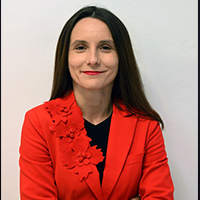
Speaker:Dr. Dijana Oreški
Associate Professor and Head of the LOUISE
Affiliation: University of Zagreb, Faculty of Organization and Informatics
Abstract:
“Dear AI, can you help me teach?”
“Yes.”
“Can you help me conduct research?”
“Yes.”
“Then how do I know when to trust you?”
This talk begins with a conversation between a human and an AI system – a conversation that reflects the reality of education and research today. Generative AI tools are transforming the way educators teach and researchers create knowledge. They can explain concepts, generate educational content, summarize scientific literature, analyze data, and support academic writing. Yet, alongside these opportunities comes a fundamental challenge: if AI can provide answers to almost any question, how do we determine which answers are trustworthy?
“Can we make AI answers more reliable?”
To address this challenge, the talk explores the development and application of Retrieval-Augmented Generation (RAG) systems, which combine large language models with trusted knowledge sources. RAG systems are increasingly used in educational and research settings to provide context-aware, evidence-based support for learning and scientific work. However, building a RAG system is only the beginning.
“How do we know that a RAG system is trustworthy?”
This part discusses the growing importance of evaluating RAG AI systems beyond traditional performance metrics. Trustworthy AI requires systematic evaluation of retrieval quality, factual accuracy, source credibility, and transparency. As AI becomes embedded in educational and research workflows, evaluation becomes a prerequisite for responsible adoption.
“If AI systems continue to improve, what do humans need to learn?”
The answer lies in AI literacy. AI literacy is becoming a fundamental competence for students, educators, and researchers. Beyond learning how to use AI tools, individuals must learn how to critically evaluate AI-generated content, understand the limitations of AI systems, and assess the quality of information sources.
Ultimately, the future of education and research is not a choice between human intelligence and artificial intelligence. It is about creating effective partnerships between them. The talk concludes by explaining the concept of augmented intelligence, where AI is not viewed as a replacement for human expertise, but as a tool that enhances human reasoning, creativity, and decision-making.
Biography:
Dijana Oreski is an Associate Professor of Artificial Intelligence (AI) and Machine Learning (ML) at the University of Zagreb, Faculty of Organization and Informatics. She is the head of the Laboratory for Data Mining and Intelligent Systems (LOUISE). Her research interest lies at the intersection of artificial intelligence and social sciences, focusing on the application of AI and ML to address societal challenges and support sustainable development. She is particularly interested in the use of AI to promote data-driven decision making in business, education, and green transition initiatives such as renewable energy and sustainability-oriented innovation. She actively promotes AI literacy and contributes to the development of practical AI-driven solutions aimed at enhancing productivity and organizational efficiency.
Interest:
Artificial Intelligence and Machine Learning
• AI in Business and Decision Support
• AI in Education and Learning
• AI for Renewable Energy and Sustainable Development
AI Literacy and Human–AI Collaboration (Augmented Intelligence)
Explainable and Responsible AI
Abstract:
Artificial intelligence (AI) is rapidly transforming higher education and creating new opportunities for personalization, automation, learning analytics, and pedagogical support within digital learning environments. At the same time, its growing use in teaching, learning, and institutional processes raises important questions regarding transparency, trust, accountability, inclusion, academic integrity, data protection, and the role of human decision-making.
This keynote argues that digital transformation in higher education cannot be understood solely as a technological process. Rather, the development of AI-enabled learning environments requires ethical reflection, stakeholder engagement, institutional responsibility, and governance approaches that ensure innovation remains aligned with educational values and societal expectations.
Drawing on the concept of Open and Responsible Research and Innovation (ORRI), the keynote proposes that responsible AI requires more than the adoption of technical solutions. ORRI provides a framework for aligning innovation with societal values through openness, public engagement, ethics, inclusion, and responsible governance. In the context of higher education, these dimensions offer a foundation for ensuring that AI-supported educational practices remain human-centered, trustworthy, and socially responsive.
The keynote examines key challenges associated with the use of AI in learning environments, including AI-generated content, personalized learning, automated assessment, learning analytics, and data protection. Particular attention is given to the implications of these developments for educators, students, researchers, and institutions, highlighting the need to balance technological innovation with educational goals and public trust.
The presentation also draws on experiences and outcomes from the RE-IMAGINE project, which translates ORRI into practical approaches for responsible digital transformation in higher education. Through an Ethics-in-Practice Framework structured around the operational principles of Openness, Responsibility, Reflexivity, and Inclusiveness, the project demonstrates how responsible innovation can be embedded in everyday educational practice. Ultimately, the keynote argues that responsible AI depends not only on technological advances but also on institutional capacity, reflective practice, and effective governance.

Speaker:Dr. Emilija Mančić
Associate Professor
Affiliation: : Belgrade Metropolitan University, Faculty of Foreign Languages and Faculty of Information Technology
Biography:
She worked as a Research Assistant at the University of Vienna and later participated in an OeAD research project on post-imperial narratives and nation-building in Central Europe. As an Assistant Professor, she taught German Literature, Culture of German-Speaking Countries, and Contemporary German Language. Her research interests include German literature, cultural studies, and foreign language teaching. She is also an experienced translator and a member of the Vienna Association for Cultural Analysis (ACA).

Speaker:Dr. Emilija Kisić
Associate Professor
Affiliation: : Belgrade Metropolitan University, Faculty of Foreign Languages and Faculty of Information Technology
Biography:
Dr. Kisić is an Assistant Professor at Belgrade Metropolitan University, Faculty of Information Technology. She obtained her Bachelor’s, Master’s, and PhD degrees from the Faculty of Electrical Engineering, University of Belgrade, specializing in Signals and Systems. She completed her PhD in 2016 with a dissertation focused on statistical signal processing, predictive maintenance, and fault detection.
Her research interests include artificial intelligence, machine learning, and statistical signal processing. She is the author and co-author of numerous publications in national and international journals and conference proceedings. In addition to her teaching activities, she has contributed to the development of educational materials, participated in international workshops and seminars, and has been involved in Erasmus+ projects.

Speaker:Dr. Miljan Milošević
Full Professor
Affiliation: Belgrade Metropolitan University, Faculty of Information Technology
Abstract:
Educational escape rooms have emerged as an innovative and engaging learning approach that combines problem-solving, collaboration, and gamification in educational environments. The IGLUE project aims to empower universities to create and conduct pedagogically sound educational escape rooms and to promote the widespread adoption of such innovative learning activities across Europe in order to enhance students’ performance and engagement. Within this context, the Escapp platform was developed as a virtual platform for creating, conducting, and sharing educational escape rooms, deployed at participating institutions and forming a European network of educational escape rooms. This paper presents the design and development of several educational escape rooms created using the Escapp platform for different university courses, including Basics of Physics, Programming 2D Games, Programming 3D Games, C++ Programming Language, and History of Design in the Old and Middle Ages. The presented escape rooms integrate subject-specific learning objectives with interactive digital puzzles, code analysis tasks, and collaborative activities designed to support active learning and problem-solving skills. The paper also discusses the structure of the developed escape rooms, their implementation workflow within the Escapp platform, and the initial experiences related to their deployment in higher education settings. The presented approach demonstrates how educational escape rooms can be effectively integrated into diverse academic disciplines while supporting student engagement, collaboration, and experiential learning.
Biography:
Dr. Milošević graduated from the Faculty of Mechanical Engineering, University of Kragujevac, in 2008 and obtained his PhD from the same institution in 2012. Since 2008, he has been affiliated with the Bioengineering Research and Development Center (BioIRC) in Kragujevac, and since 2019 he has also been a researcher at the Institute for Information Technologies, University of Kragujevac.
His research focuses on computational modeling and the application of the finite element method in biomedical engineering. He has authored and co-authored numerous scientific publications in international journals and conference proceedings and has participated in several national and international research projects. He is a member of ECCOMAS, the Serbian Society of Mechanics, and the Serbian Society for Computational Mechanics. Since 2013, he has been a faculty member at Belgrade Metropolitan University, teaching courses in computer science and game development.

Speaker:Dr. Alberto Fornasari
Full Professor and Director of CIRPAS
Affiliation: University of Bari Aldo Moro
Abstract:
Generative artificial intelligence is no longer a horizon — it is a present condition of educational practice. Yet the quality of what AI systems produce for teachers and learners depends, in ways that are only beginning to be theorised, on the quality of what humans put in. This keynote argues that prompt engineering — the capacity to design, refine and ethically frame instructions for generative AI systems — constitutes an emerging and distinctly pedagogical competence, one that cannot be reduced to technical fluency and cannot be left to chance in teacher education.
The talk develops this argument across three interconnected lines of reflection. First, it situates prompt engineering within the broader landscape of AI literacy and teacher professional development, tracing its movement from a niche technical practice to a general-purpose educational skill with implications for lesson design, differentiation, and accessibility. Second, it examines the particular significance of this competence for inclusive education: when a teacher designs a prompt that explicitly names a learner’s profile, specifies accessibility needs, and builds in ethical safeguards, they are not merely using a tool more effectively — they are enacting a form of pedagogical intentionality that generative AI alone cannot supply. Third, the talk addresses the question of how this competence can be cultivated through teacher training, attending both to the opportunity of short, structured interventions and to the deeper challenge of fostering a critical, professionally sustained stance toward AI — what the ORRI framework describes as the integration of transparency, accountability and reflexivity into AI-supported practice.
Throughout, the keynote holds in view a double tension that defines the current moment: between the genuine potential of generative AI to support differentiated and inclusive learning, and the risk that its uncritical adoption reproduces existing biases and inequities. The central claim is that navigating this tension productively is not primarily a technological problem but an educational one — and that preparing teachers to navigate it with competence, confidence and ethical awareness is among the most consequential tasks facing teacher education today.
Keywords: prompt engineering, teacher education, inclusive education, AI literacy, professional competence, responsible AI, ORRI
Biography:
Alberto Fornasari, PhD in Education and Political Education, is Associate Professor of Experimental Pedagogy (qualified for Full Professorship since 2021) at the Department of Education, Psychology and Communication Sciences of the University of Bari Aldo Moro, Italy.
He serves as Director of CIRPAS (Inter-University Centre for Research and Training on Population, Environment and Health), a consortium involving the University of Bari Aldo Moro, the University of Foggia, and the University of Calabria.
He is the Departmental Delegate for Third Mission activities, Director of the Intercultural Pedagogy Laboratory, and a member of the Experimental Pedagogy Laboratory at Roma Tre University.
Formerly a member of the Board of Directors of the Intercultura Foundation, he also served for two terms as Board Member and Vice-President of Intercultura Onlus, one of Italy’s leading organizations promoting international student mobility and intercultural education.
He is a member of the Academic Board of the PhD Programme in Human Sciences at the University of Bari Aldo Moro and of the PhD Programme in Leadership, Empowerment and Digital Innovation in Education and Learning (LEDIEL). He also serves on the Executive Board of SIREM (Italian Society for Research on Media Education).
He is a REPRISE evaluator for the Italian Ministry of University and Research (MUR), assessing national research and university projects, and has coordinated several European and international research initiatives as Principal Investigator.
Professor Fornasari is the author of approximately 120 scientific publications and regularly participates as an invited speaker and keynote speaker at national and international conferences. His research interests include intercultural education, media education, innovative teaching methodologies, educational technologies, e-learning, and inclusive education. He is actively involved in teacher education programmes for educators working with students with special educational needs.
In 2019, he received the Italian Pedagogy Award from SIPED (Italian Society of Pedagogy) for the book “Intergenerational Encounters: Reflections and Empirical Evidence”, awarded at the Catholic University of the Sacred Heart in Milan. In 2025, he was awarded the Aldo Visalberghi Prize by SIRD (Italian Society for Educational Research) for the article “The Influence of Media and Emotions in the Post-Truth Era: A Study on Civic Attitudes”, published in the A-ranked scientific journal Q-Times.
An expert in educational guidance and career orientation, he has served as a trainer within the university project “Orienteering” and has carried out guidance and orientation activities in numerous secondary schools throughout Italy.
He is a member of the Scientific Advisory Boards of several A-ranked academic journals, including Cadmo, QWERTY, and REM, and serves as Editor of the book series “Trajectories of Experimental Pedagogy” published by FrancoAngeli.
He has been a Visiting Professor at numerous European and non-European universities, including those in Strasbourg, Seville, Lisbon, Bucharest, and Belgrade.
Professor Fornasari has directed several first- and second-level postgraduate Master’s programmes at the University of Bari Aldo Moro, including Green Management and Sustainable Business, European Project Management, and Digital Reputation Management.
He has chaired numerous academic recruitment and promotion committees at Italian universities and is currently a member of the working group “Definition of Professional Competence Frameworks for School Personnel” established by SAFI (School of Advanced Training for Education) of the Italian Ministry of Education and Merit.